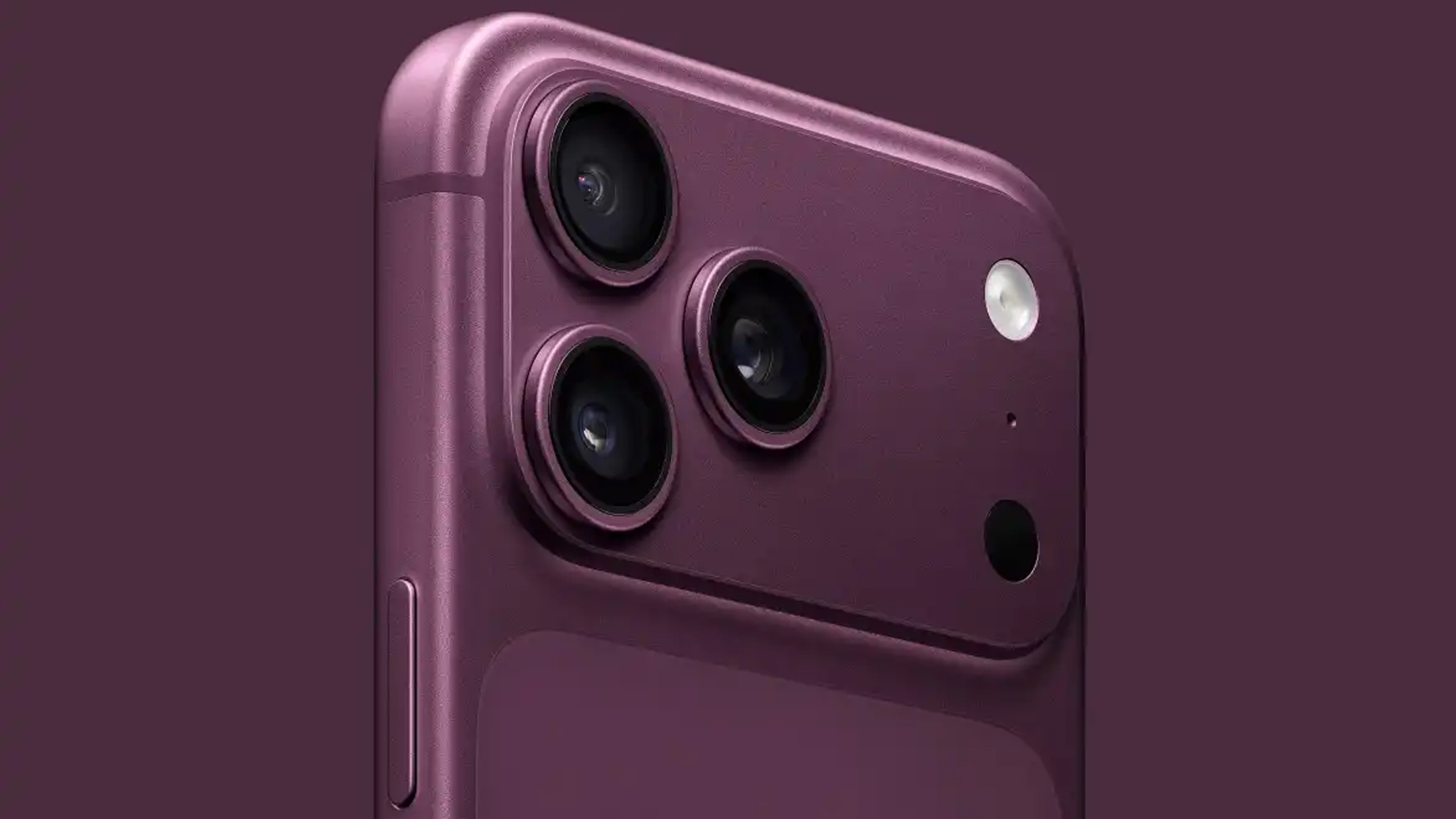
The iPhone 18 Pro is shaping up to be one of Apple's most consequential September launches in years, not simply because a new Pro iPhone is due. The 2026 lineup is expected to change the rhythm of Apple's entire iPhone business, with the iPhone 18 Pro and iPhone 18 Pro Max arriving in the fall while the regular iPhone 18 and iPhone 18e are reportedly moving to spring 2027.
At the same time, Apple is expected to introduce its first foldable iPhone, widely rumored to be called the iPhone Ultra. That makes the key question right now less about whether Apple will hold a September event and more about exactly when the event, pre-orders, iOS 27 release and retail launch are likely to happen.
Apple has not yet confirmed the schedule. A recent report placed the event on September 8, but that date conflicts with the historical pattern examined in the source material. Based on that pattern, September 9 is the stronger near-term prediction, although a September 14 or 15 event remains possible if Apple pushes the launch into the following week.
The most likely iPhone 18 Pro event date
The strongest current prediction is Wednesday, September 9, 2026, with the keynote expected at 10 a.m. Pacific Time, or 1 p.m. Eastern and 6 p.m. in the U.K. The event is expected to take place at the Steve Jobs Theater at Apple's headquarters in Cupertino.
That date is still a prediction, not an Apple announcement. The reason it stands out is the calendar: September 7 is Labor Day in the United States, and the source research notes that Apple has historically avoided holding its iPhone keynote the day immediately after the holiday. A September 9 event also fits the pattern seen in recent iPhone launches.
A separate report had placed the event on Tuesday, September 8. The available source material argues against that date, while Bloomberg's Mark Gurman is also described as having shifted his expectation toward September 9. Apple's actual invitation will settle the question.
Why September 9 matters for the rest of the schedule
Apple's launch calendar usually works as a sequence. Once the keynote date is known, the likely pre-order, software, review and retail dates become easier to estimate.
If Apple follows the September 9 scenario, pre-orders would likely open on Saturday, September 12 rather than the usual Friday. The source material points to September 11 as a date Apple may avoid, making September 12 the more plausible pre-order date under this scenario.
The new iPhones would then be expected to reach stores on Friday, September 18. That timing also leaves room for first reviews to appear on Wednesday, September 16, giving reviewers roughly two days with the hardware before retail availability.
iPhone 18 Pro release schedule at a glance
| Milestone | Current estimate | Confidence |
|---|---|---|
| Apple event | Wednesday, September 9, 2026 at 10 a.m. Pacific | Prediction, not confirmed |
| Pre-orders | Saturday, September 12, 2026 | Dependent on event date |
| iOS 27 | Monday, September 14, 2026 is the leading estimate | Likely, not confirmed |
| First reviews | Wednesday, September 16, 2026 | Historical-pattern estimate |
| Retail launch | Friday, September 18, 2026 | Dependent on the event schedule |
There is another possible week for the launch
The September 9 scenario is not the only one worth watching. The source material also points to a possible September 14 or September 15 event. If Apple chooses that week, the expected sequence would shift: pre-orders could move to Friday, September 18, with retail availability potentially moving to Friday, September 25.
This is why reporting a single September date as a certainty would be misleading right now. The useful question is not simply "What is the iPhone 18 Pro release date?" but which calendar scenario best fits Apple's established launch behavior.
The split iPhone launch is the bigger story
The most important change may not be the keynote date at all. Apple is reportedly preparing a split launch strategy in which the premium iPhone 18 Pro models arrive in fall 2026 while the regular iPhone 18 and iPhone 18e wait until spring 2027.
If that schedule holds, September becomes a more premium-focused iPhone event. The iPhone 18 Pro and Pro Max would share the stage with the rumored foldable iPhone, while customers looking for a less expensive new iPhone would have to wait for the spring cycle.
That would make the 2026 event different from the familiar pattern in which Apple's main iPhone family is refreshed together. It also explains why the iPhone 18 Pro release date matters beyond one product: it could mark the beginning of a new launch strategy for the entire iPhone range.
What is changing on the iPhone 18 Pro?
The iPhone 18 Pro and iPhone 18 Pro Max are expected to keep the general design language of the iPhone 17 Pro generation rather than receiving a complete visual redesign. Reported changes are more targeted, with the Dynamic Island, camera system, processor, modem and battery all receiving attention.
The displays are expected to remain at roughly 6.3 inches for the Pro and 6.9 inches for the Pro Max. Reports about a substantially smaller Dynamic Island have circulated, including claims of a narrower opening, but the source material also notes conflicting information that the change could be delayed. Under-display Face ID is therefore something to treat cautiously rather than as a settled feature.
A20 Pro could be the biggest technical upgrade
The iPhone 18 Pro is expected to use Apple's A20 Pro chip, built with TSMC's 2nm manufacturing process. One source report puts the potential improvement at up to 18% faster and up to 30% more power efficient than the A19 Pro, while the broader reporting in the supplied material gives figures of up to 15% higher performance and 30% better efficiency for the A20 family.
Because these are reported figures rather than Apple specifications, the exact performance difference should not be treated as confirmed. The more important point is the transition to 2nm itself. A smaller manufacturing process can allow more transistors and potentially improve the balance between performance, efficiency and battery life.
The A20 family is also reported to use TSMC's wafer-level multi-chip module approach, which could integrate memory more closely with the processor package. The reported goal is faster AI processing and better efficiency, although Apple has not publicly confirmed these details.
The camera could get a much more useful upgrade
Camera changes may be more meaningful to everyday users than a benchmark score. The iPhone 18 Pro is rumored to gain a variable-aperture main camera, giving the camera system more control over how much light reaches the sensor.
A variable aperture could help in situations where the phone needs to manage bright scenes, low-light exposure and depth of field more deliberately. The supplied reporting also points to a possible larger-aperture telephoto camera and a new stacked image sensor, which could improve responsiveness, noise handling and dynamic range.
These features remain rumors, but they point toward a clear direction: Apple appears to be looking at the camera as a system-level upgrade rather than simply increasing megapixels.
Battery life could benefit from the 2nm transition
The iPhone 18 Pro Max is expected to receive a larger battery, while the more efficient A20 generation could provide another source of battery-life gains.
The supplied reporting gives different battery capacities for U.S. and Chinese versions because of the physical SIM requirement in China. It lists a reported 4,288mAh capacity for the U.S. iPhone 18 Pro and 5,567mAh for the U.S. Pro Max, although these figures should be treated as leaks rather than confirmed specifications.
The rumored foldable iPhone changes the context
Apple's first foldable iPhone is expected to arrive alongside the Pro models or around the same launch window, although its exact availability remains uncertain. The device is widely rumored to be called the iPhone Ultra and could be around 5.5 inches when closed and approximately 7.8 inches when open.
Supply is another unresolved question. The supplied reporting says the foldable could be very limited initially and may have a restricted regional rollout. That means its announcement date and its actual retail availability may not necessarily be identical.
For the iPhone 18 Pro, this creates an unusual situation: Apple's traditional flagship is expected to share attention with a completely new product category. That could make the September 2026 event as much about Apple's next product strategy as it is about the next Pro iPhone.
What about the iPhone 18 and iPhone 18e?
The regular iPhone 18 models are reportedly moving to spring 2027 rather than launching alongside the Pro models in September 2026. That includes the lower-end iPhone 18e in the split-launch reporting.
The result is a clearer separation between Apple's premium and mainstream upgrade cycles. Customers who want Apple's newest high-end hardware in the usual September window may have fewer choices, while buyers prioritizing price may have a reason to wait.
iPhone 18 Pro price is still one of the biggest unknowns
Pricing is particularly uncertain. The supplied reporting cites estimates ranging from a potential $200 increase to claims that the iPhone 18 Pro could start around $1,399. Other estimates suggest the Pro Max could see a substantial increase at higher storage capacities.
The reported pressure comes from more expensive components, including the cost associated with advanced memory and 2nm manufacturing. But these are analyst and supply-chain estimates, not Apple's final pricing.
For that reason, the useful takeaway at this stage is not a specific price tag. It is that the 2026 Pro generation could face more upward pricing pressure than a routine annual refresh.
What we know, what is likely and what remains a rumor
The iPhone 18 Pro story contains a mixture of historical pattern analysis, reporting and leaks. Separating those categories is important because a date or specification can quickly be repeated across the internet until an estimate starts to look like a fact.
September 2026 launch
The Pro models are expected to be part of Apple's fall 2026 iPhone cycle.
September 9 event
The date fits the calendar and historical pattern described in the supplied reporting, but Apple has not confirmed it.
A20 Pro on 2nm
The next Pro chip is widely reported to move to TSMC's 2nm process, with performance and efficiency gains expected.
Foldable availability
The rumored iPhone Ultra could have limited initial supply or a delayed regional rollout.
The bigger picture
There are dozens of iPhone 18 stories competing for attention right now, but the useful question is not simply which rumor appeared most recently. The more valuable way to read the 2026 launch is to connect the calendar, the split-release strategy and the reported hardware changes.
If the September 9 scenario is correct, Apple would be entering a new product cycle with the premium iPhone 18 Pro models and a first-generation foldable at the center, while the regular iPhone 18 models move to a later launch. At the hardware level, the A20 Pro's reported 2nm transition, camera changes and potential battery improvements point toward an upgrade focused on efficiency and capability rather than a complete redesign.
For now, September 9 is the strongest working date in the available reporting, followed by a possible September 12 pre-order, September 14 iOS 27 release and September 18 retail launch. But those dates should remain labeled as estimates until Apple publishes its official invitation and schedule.