Google has officially introduced the Pixel 11, bringing a new generation of hardware and AI features to its flagship smartphone lineup. The new phone arrives alongside the Pixel 11 Pro, Pixel 11 Pro XL and Pixel 11 Pro Fold, giving Google a broader Pixel family for 2026.
The standard Pixel 11 focuses on a combination of camera improvements, Google's new Tensor G6 processor, Gemini-powered intelligence and practical hardware upgrades. Google says the new generation is designed to make Pixel more helpful while keeping more of the experience tightly integrated between hardware, software and AI.
A refined Pixel design
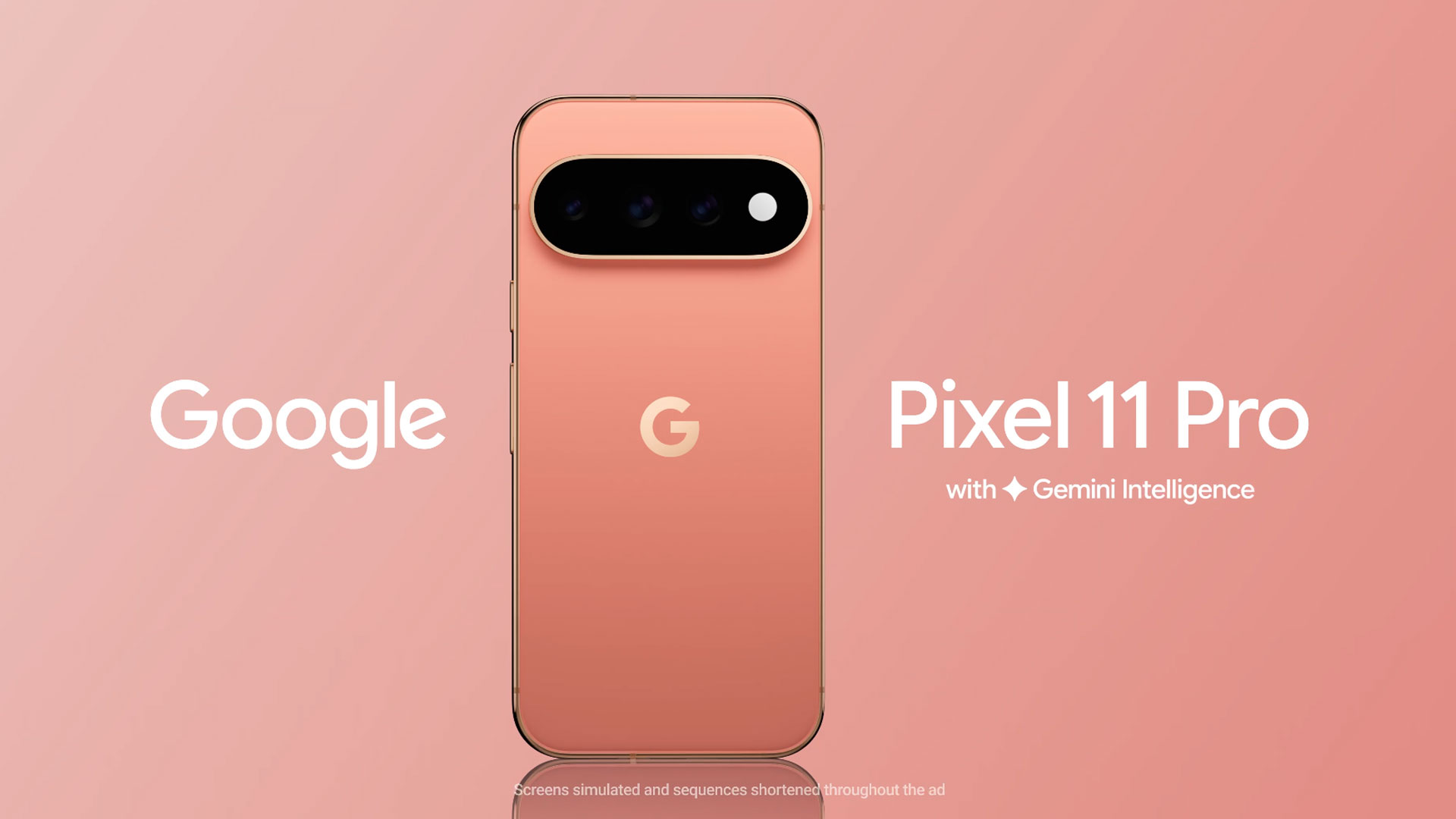
The Pixel 11 retains Google's distinctive camera-bar design but introduces a slimmer profile for the camera bar. Google says the thickness has been reduced by 40%, making the phone more streamlined and helping it sit more evenly when used with a Made by Google case.
The phone is available in four finishes: Pistachio, Hibiscus, Frost and Obsidian. Google has also retained its compact form factor, pairing the phone with an Actua display and a satin metal frame.
Tensor G6 puts AI at the center
One of the biggest changes inside the Pixel 11 is Google's new Tensor G6 processor. Rather than positioning the chip simply as a conventional performance upgrade, Google says Tensor G6 was designed as a purpose-built engine for AI and the company's latest Gemini experiences.
Google says Tensor G6 provides 25% faster web browsing and 15% quicker app launches. The chip also includes 50% more TPU compute, while on-device AI tasks using the latest Gemini Nano model can be processed up to 3.5 times faster while using up to 3.5 times less energy.
That combination is important because Google's Pixel strategy is increasingly built around local AI processing rather than treating AI as a separate software feature. Camera processing, personal assistance and other intelligent features are all increasingly connected to the phone's silicon.
A major camera upgrade
The Pixel 11 also receives one of its most significant camera upgrades in years. The main camera now uses a larger 48-megapixel sensor, which Google says provides 56% more light sensitivity.
The larger sensor is designed to improve image quality in difficult lighting conditions while giving Google's computational photography systems more information to work with.
The phone also gets a 5x telephoto camera. Powered by Tensor G6 and Google's imaging models, the telephoto system supports up to 30x Super Zoom.
Google is also improving low-light photography. The company's upgraded Image Signal Processor works alongside redesigned camera hardware and software, allowing Night Sight to capture images significantly faster while maintaining the image quality expected from Pixel photography.
Gemini becomes more deeply integrated
Camera improvements are only part of Google's Pixel strategy. The Pixel 11 generation is designed around what Google calls Gemini Intelligence, bringing more personalized assistance directly into the phone experience.
Google is using its hardware and on-device AI capabilities to make Gemini faster and more useful for everyday tasks. The company's latest Pixel features are intended to reduce the number of steps users need to take when searching for information, creating content or managing routine tasks.
Faster charging and more storage
Google is also increasing the baseline storage across the new Pixel generation. Pixel 11 starts with 256GB of storage, giving buyers twice the capacity offered by many previous base configurations.
The new generation also supports faster charging, including Pixelsnap and Qi2.2 25W compatibility. Google says its latest charging system is the fastest it has introduced for the Pixel lineup.
All three standard slab models in the new Pixel 11 family start at 256GB, while Google's Pro models receive additional hardware and display upgrades.
Pixel 11 price and availability
Google has priced the Pixel 11 starting at $899. The Pixel 11 Pro starts at $1,099, while the Pixel 11 Pro XL starts at $1,299.
Google says the Pixel 11, Pixel 11 Pro and Pixel 11 Pro XL are available for pre-order, with retail availability beginning August 20, 2026.
The Pixel 11 Pro Fold is part of the same generation but is being positioned separately as Google's latest foldable flagship.
What makes the Pixel 11 different
The most important change with Pixel 11 is not a single specification. Google's strategy is increasingly about combining the camera, processor, operating system and AI into one experience.
The larger camera sensor gives the imaging system more information, Tensor G6 provides the processing power for Google's latest AI and photography models, and Gemini provides the intelligence layer that connects those capabilities to everyday tasks.
That makes the Pixel 11 less about competing purely on processor specifications and more about Google's broader approach to an AI-first smartphone.
Pixel 11 at a glance
| Category | Pixel 11 |
|---|---|
| Processor | Google Tensor G6 |
| Main Camera | 48MP larger sensor |
| Telephoto | 5x telephoto with up to 30x Super Zoom |
| AI | Gemini Intelligence and latest Gemini Nano integration |
| Base Storage | 256GB |
| Charging | Pixelsnap and Qi2.2 25W compatibility |
| Starting Price | $899 |
| Retail Availability | August 20, 2026 |
The bigger picture
Google's Pixel 11 launch shows how the company's smartphone strategy is evolving. The emphasis is moving beyond individual hardware specifications toward an integrated system where AI, photography, performance and software updates work together.
For users considering an upgrade, the larger camera sensor, Tensor G6 and deeper Gemini integration are likely to be the most meaningful changes. The move to 256GB of base storage and faster charging also addresses two practical areas that directly affect everyday smartphone use.
With the Pixel 11 generation, Google is clearly positioning its hardware as a platform for its broader AI ecosystem rather than simply another Android flagship.